


How to Speed Up Digestion Naturally and Keep Things Moving Every Day
You ate hours ago but still feel full. Your stomach is sluggish, your energy is low, and that familiar heaviness just will not shift. Slow digestion is one of those problems that does not always announce itself loudly — it just quietly makes every day feel a little worse than it should.
The good news is that digestion is one of the most responsive systems in the body. Small, consistent changes to how you eat, move, and live can noticeably speed up how efficiently your body moves food through, absorbs nutrients, and clears waste. No supplements required. No restrictive diets. Just a handful of approaches that are well-supported by research and actually workable in daily life.
This guide covers everything that genuinely moves the needle — from what happens inside your gut during digestion, to the specific habits that slow it down, to the most effective evidence-based ways to get things moving again.

How Long Does Digestion Actually Take?
Before looking at how to speed digestion up, it helps to know what a normal timeframe actually looks like. Most people assume food is digested and done within a few hours of eating. The reality is considerably longer.
According to data reviewed in a NIH-published study on gastrointestinal transit time, the normal ranges for digestion by segment are:
| Digestive Stage | Normal Time Range | What Happens |
|---|---|---|
| Stomach | 2 to 5 hours | Food breaks down into chyme (semi-liquid) via acid and enzymes |
| Small intestine | 2 to 6 hours | Nutrients absorbed into the bloodstream |
| Colon (large intestine) | 10 to 59 hours | Water reabsorbed, waste formed into stool |
| Whole gut total | 24 to 72 hours | Full journey from eating to elimination |
The colon is where most of the time is spent. If your digestion feels sluggish, it is almost always the colon that has slowed down. Everything you do to speed up digestion primarily targets this stage — keeping waste moving through so it does not sit, ferment, and cause discomfort.
Consistently going more than 72 hours without a bowel movement is considered outside the normal range and a sign that something specific needs to change — whether that is diet, activity levels, hydration, or an underlying condition worth discussing with a doctor.
Signs Your Digestion Is Slower Than It Should Be
Slow digestion does not always mean obvious constipation. It shows up in subtler ways that people often attribute to other causes. Recognising these signs is the first step to addressing them.
- Feeling full for hours after a meal, even a light one
- Persistent bloating and that heavy, lead-weight sensation in your stomach
- Fewer than three bowel movements per week, or needing to strain
- Consistently low energy, especially after meals
- Feeling nauseous after eating, particularly with fatty or rich food
- Stools that are hard, pellet-like, or difficult to pass
- Noticing food in your stool that appears partially undigested
If several of these sound familiar, your digestion is likely running slower than it should. The strategies below address the root causes rather than just the symptoms. And if you are also experiencing persistent bloating on top of slow digestion, our article on why your stomach feels heavy and bloated covers the causes and fixes in more detail.

What Slows Digestion Down
Understanding what puts the brakes on your digestion makes the fixes significantly more obvious. Most people are doing several of these things without realising the cumulative effect.
Low-Fibre Diet
Fibre is the single most important dietary factor for digestive speed. It adds bulk to stool, retains water in the colon, and stimulates the muscular contractions (peristalsis) that move waste through. When fibre is consistently low — as it is in most processed food diets — the colon has very little to work with and stool moves slowly. The daily recommendation is 25 to 38 grams for adults. Most people get around 15.
Inadequate Hydration
Your large intestine absorbs water from waste material. When you are not drinking enough, your body pulls more water from stool to compensate, making it harder and slower to pass. Dehydration is one of the most direct and fixable causes of slow transit time. Water keeps things moving — without enough of it, they simply stop.
Physical Inactivity
Sitting for extended periods dramatically reduces gut motility. Movement physically stimulates the gut through mechanical pressure on the abdominal area and neurological signals that prompt digestive contractions. A sedentary lifestyle is one of the most consistent predictors of constipation and slow digestion across research populations.
Chronic Stress
When your nervous system is in a state of chronic stress, it diverts resources away from digestion. The gut-brain axis means your digestive system is directly affected by your mental state. Stress slows gastric emptying and can disrupt the coordinated muscular contractions your gut relies on to move food through efficiently.
Eating Late at Night
Your digestive system follows a circadian rhythm. Activity slows naturally at night in line with sleep preparation. Eating large meals close to bedtime means your gut is trying to process food during its natural rest window, leading to slower transit, reflux risk, and that uncomfortable full feeling in the morning.
How to Speed Up Digestion Naturally
These are the changes that have the strongest evidence behind them and the most practical application in everyday life. Not all of them will apply equally to everyone — start with the ones most relevant to your current habits and build from there.
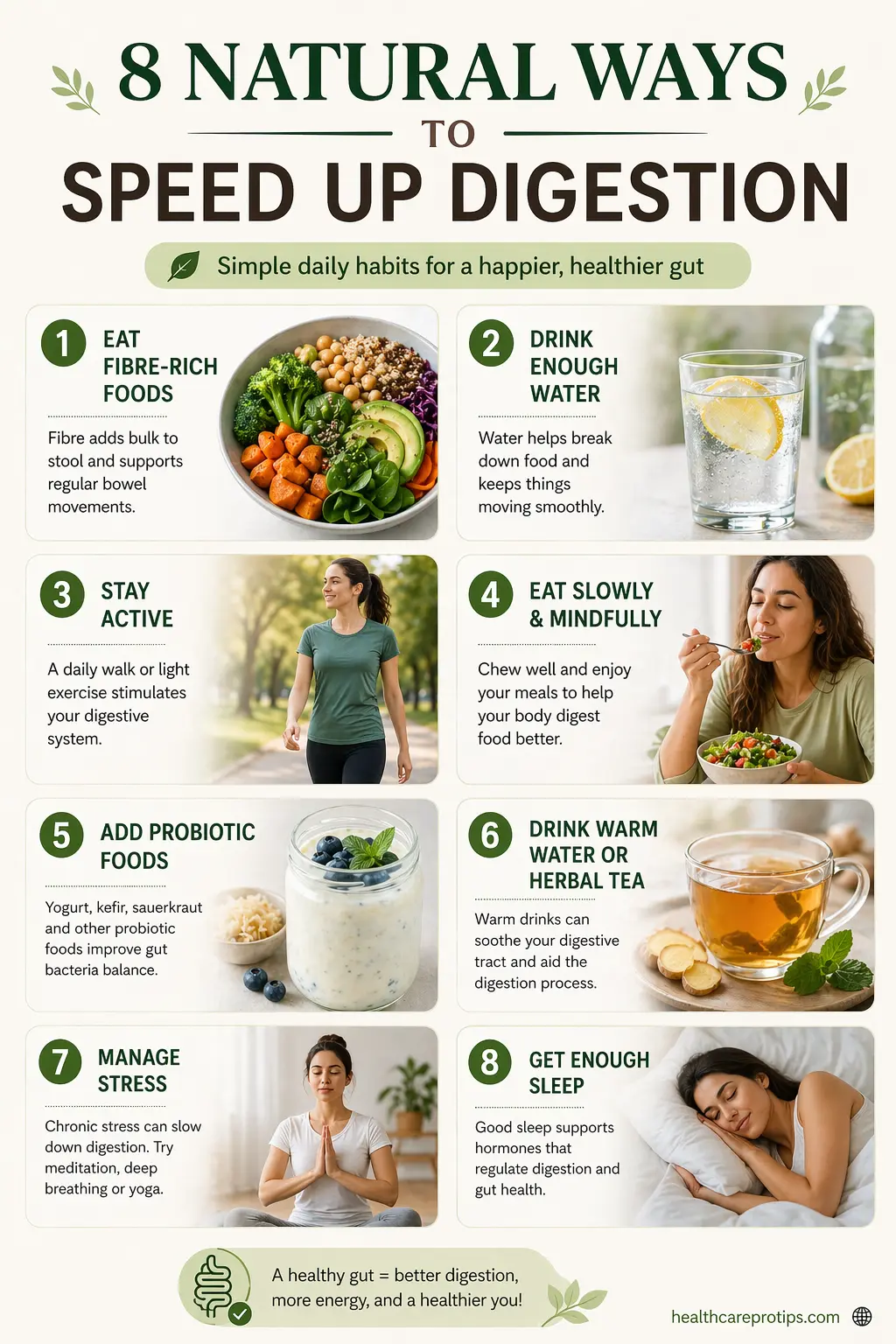
1. Increase Your Fibre Intake Gradually
Fibre is the most direct lever you have for speeding up digestive transit. Both types matter but they work differently. Soluble fibre (found in oats, apples, and legumes) forms a gel that slows things down slightly in the small intestine, helping nutrient absorption. Insoluble fibre (found in whole grains, vegetables, and wheat bran) adds bulk and speeds up colon transit. For most people dealing with slow digestion, insoluble fibre is the primary target.
The critical caveat: increase fibre gradually. Going from 15 grams to 35 grams overnight will cause significant bloating and gas as your gut bacteria adjust. Add 3 to 5 grams per week and increase your water intake at the same time. Fibre without water makes things worse, not better.
2. Drink More Water, Especially Between Meals
The relationship between hydration and digestion is direct and well-established. Water keeps food moving through the digestive tract by maintaining the fluid environment needed for peristalsis. It also softens stool in the colon, making elimination faster and easier. According to Cleveland Clinic, adequate hydration is one of the four foundational pillars of gut health alongside diet, exercise, and sleep.
Aim for 6 to 8 glasses daily. Drink water between meals rather than during them in large amounts, which can dilute stomach acid and slow the initial breakdown of food. Starting your morning with a glass of water before eating is a simple habit that reliably prompts digestive activity.
3. Walk After Meals
This is one of the most consistently supported and underutilised ways to speed up digestion. A 2025 review of physical exercise and gastrointestinal health published through PMC/NIH found that low-intensity exercise specifically accelerates gastric emptying rate — the speed at which your stomach moves food into the small intestine. High-intensity exercise, interestingly, can delay it.
This means a brisk 10 to 15 minute walk after meals is genuinely more beneficial for digestion than a gym session would be right after eating. Walking creates gentle mechanical pressure on the abdominal area, stimulates the vagus nerve which regulates gut contractions, and keeps blood flowing to the digestive organs. It requires no equipment, no gym membership, and virtually no additional time in a typical day.
4. Chew Your Food More Thoroughly
Digestion does not begin in your stomach — it begins in your mouth. Saliva contains amylase, an enzyme that starts breaking down carbohydrates before food even reaches your stomach. The more thoroughly you chew, the smaller the food particles, and the less work your stomach and small intestine need to do. More efficient early digestion means faster overall transit.
As highlighted by Cone Health gastroenterology, eating more slowly and chewing thoroughly is among the most consistent dietary behaviours associated with improved digestive function. Aim for 20 to 30 chews per mouthful as a rough guideline. It feels deliberate at first but becomes automatic quickly.
5. Do Not Lie Down After Eating
Gravity plays a genuine role in digestion. When you lie flat after eating, gastric emptying slows, reflux risk increases, and food sits in the stomach for longer than it otherwise would. Staying upright for at least two hours after a meal supports the natural downward movement your digestive system is designed for. If you nap after lunch or go to bed shortly after a late dinner, this could be contributing meaningfully to your slow digestion.
6. Eat at Consistent Times Each Day
Your digestive system runs on an internal clock. When you eat at regular, predictable times, your gut learns to anticipate food and prepares accordingly — releasing digestive enzymes, increasing motility, and optimising acid production. Irregular eating patterns, long gaps between meals, or constantly shifting mealtimes disrupt this rhythm and contribute to inconsistent, slower digestion.
This does not mean eating at exactly the same minute every day, but keeping mealtimes within a consistent window — for example, breakfast between 7 and 8am, lunch between 12 and 1pm — supports the circadian digestive cycle your gut naturally follows.
7. Manage Stress Deliberately
Chronic stress suppresses the parasympathetic nervous system — the “rest and digest” mode your body needs to process food efficiently. When the stress response dominates, digestion is deprioritised. Gastric emptying slows, gut motility decreases, and the whole process becomes less coordinated.
Even simple interventions make a measurable difference. Deep breathing before meals activates the parasympathetic system and primes your digestive organs. A few slow breaths before you start eating costs nothing and genuinely improves the conditions for digestion. For longer-term stress management, regular movement, adequate sleep, and reducing caffeine intake all help regulate the gut-brain axis in ways that benefit digestive function.
8. Add Probiotics and Fermented Foods
A diverse, healthy gut microbiome supports faster and more efficient digestion. Beneficial bacteria produce enzymes that help break down food, regulate gut motility, and maintain the health of the gut lining. Adding fermented foods such as plain yoghurt, kefir, kimchi, sauerkraut, and miso to your diet introduces live beneficial bacteria directly into your gut.
You do not need large amounts — a small serving of fermented food daily, such as a portion of plain yoghurt with breakfast or a tablespoon of sauerkraut with dinner, makes a consistent difference over time. This directly connects to the bacterial balance discussed in our article on the worst foods for gut health — because what you remove and what you add both matter.
Foods That Speed Up Digestion
Specific foods have well-documented effects on digestive speed. These are worth incorporating regularly, not just when you feel uncomfortable.
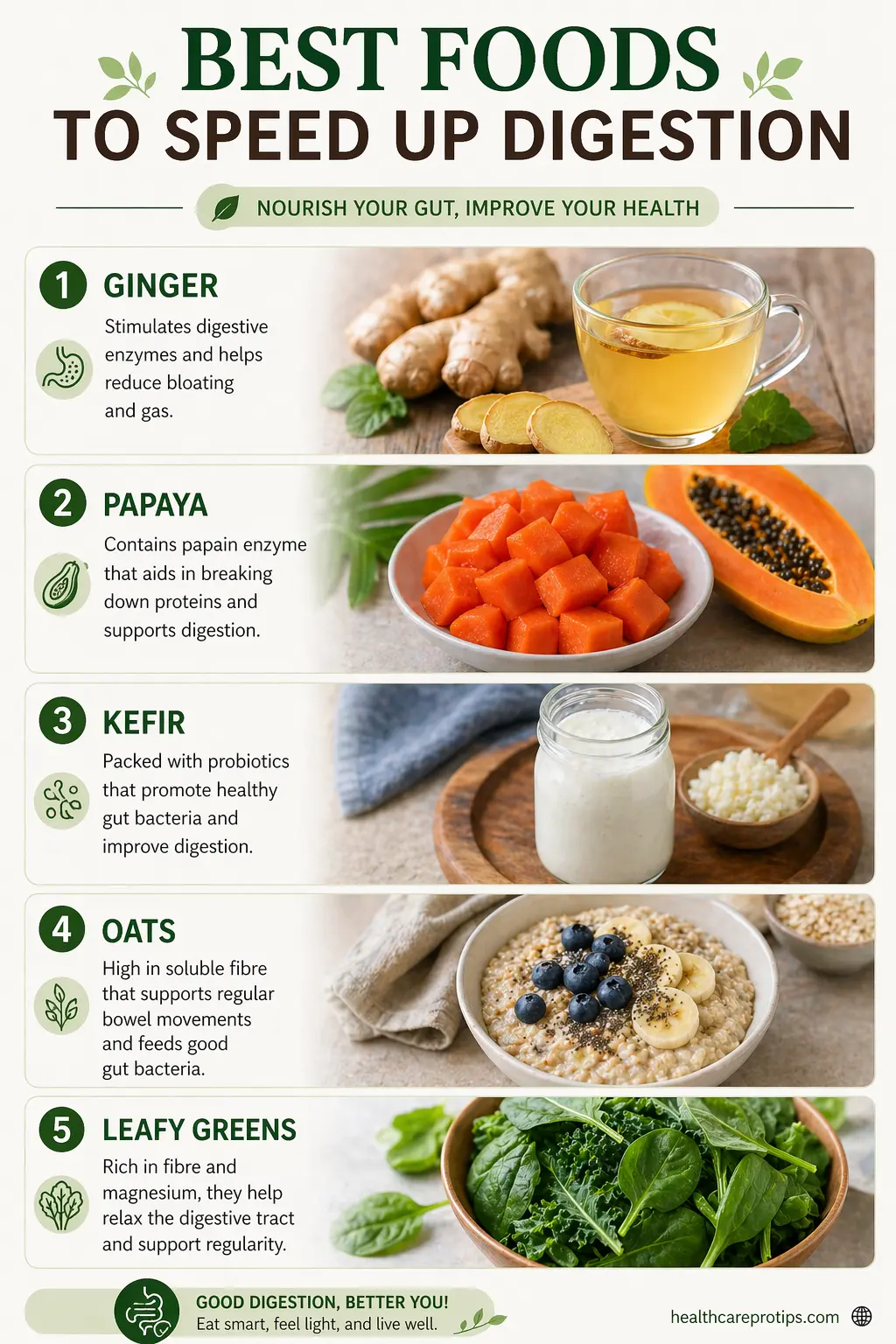
Ginger
Accelerates gastric emptying by stimulating smooth muscle contractions in the stomach. Works best as ginger tea consumed 20 to 30 minutes before or after meals.
Papaya
Contains papain, a proteolytic enzyme that breaks down protein before it reaches the small intestine, reducing the workload and speeding transit time.
Kefir and Yoghurt
Rich in live Lactobacillus bacteria that support gut motility and break down lactose. Consistently linked to reduced constipation and faster stool transit in research.
Oats
Rich in beta-glucan, a soluble fibre that feeds beneficial gut bacteria and supports healthy stool formation. Regular oat consumption is linked to improved bowel regularity.
Leafy Greens
Spinach, kale, and Swiss chard add insoluble fibre and magnesium to your diet — both of which help draw water into the colon and speed up stool movement.
Berries
Blueberries, raspberries, and blackberries are high in fibre and antioxidants that support the gut lining and feed the bacteria responsible for producing digestion-regulating SCFAs.
A Simple Daily Routine for Better Digestion
Pulling everything together into a realistic daily framework makes the habits significantly easier to maintain. This is not a rigid protocol — it is a pattern that works with the natural rhythm of your digestive system.
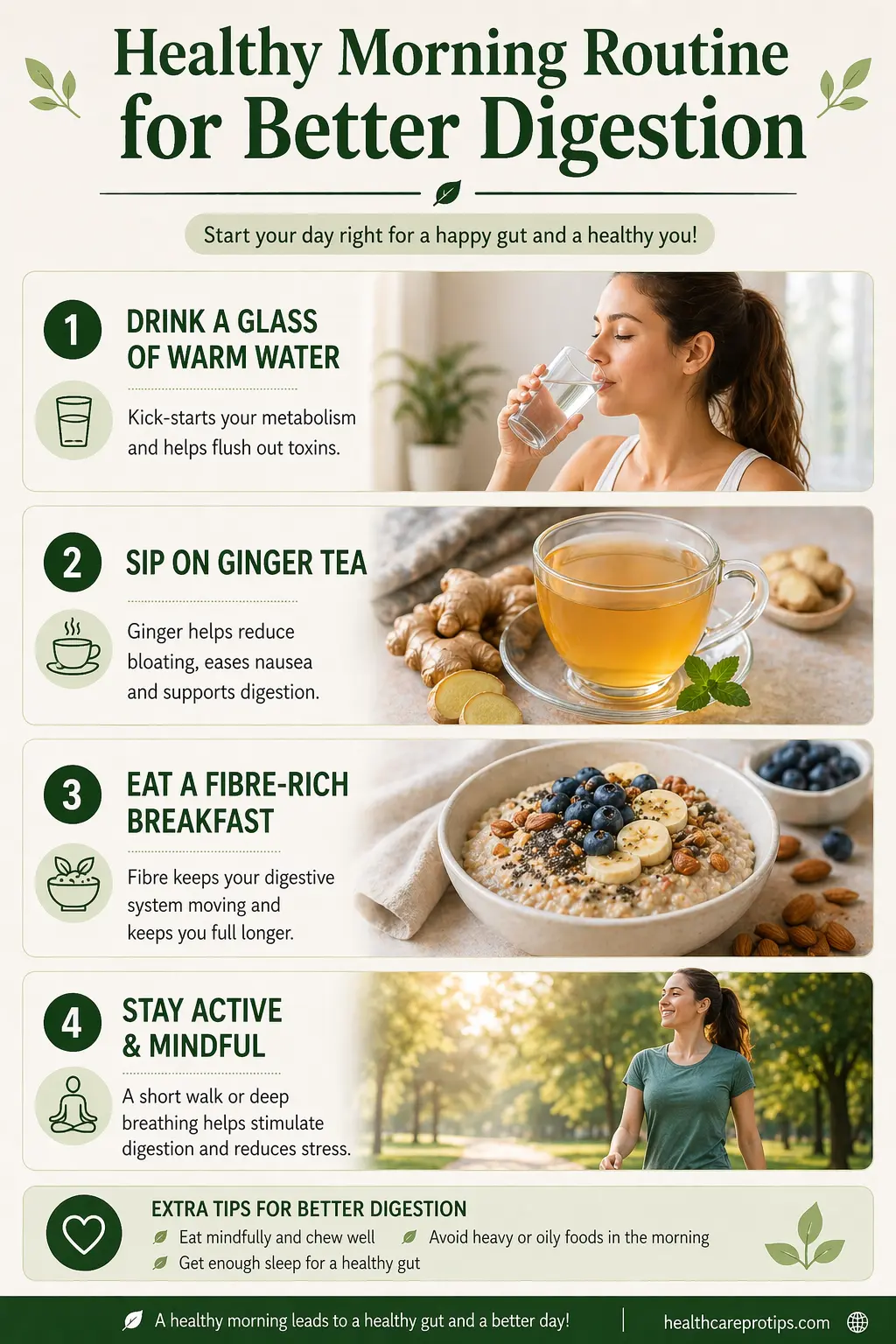
Start With a Glass of Water
Before coffee, before breakfast — drink a full glass of water as soon as you wake up. This rehydrates your digestive system after sleep and triggers the gastrocolic reflex, the natural urge for a bowel movement that happens when the stomach receives its first intake of the day.
Eat a Fibre-Rich Breakfast Without Rushing
Oats, whole grain toast, fruit, or eggs with vegetables. Sit down, eat slowly, chew properly. Avoid eating in the car, at your desk mid-task, or while scrolling. Distracted eating increases air swallowing and reduces the thorough chewing that speeds up downstream digestion.
Walk for 10 to 15 Minutes After Lunch
Even a short walk around the office, block, or garden makes a real difference. This is the single most effective post-meal habit for keeping digestion moving. If lunch is your biggest meal, prioritising movement afterward pays the biggest dividends.
Include Fermented Food at Dinner
A small portion of kimchi, sauerkraut, or plain yoghurt alongside dinner adds live cultures to your gut consistently. It does not need to be a large amount — regularity matters more than quantity for microbiome support.
Finish Eating at Least 2 to 3 Hours Before Bed
Give your digestive system time to process your last meal before your body shifts into sleep mode. A late dinner that you lie down on within an hour is one of the most reliable ways to wake up feeling slow, heavy, and uncomfortable the next morning.
Digestion is a 24-hour process. It does not just happen at mealtimes. What you do between meals — how much you move, how much you sleep, how well you manage stress — shapes how efficiently your gut functions every single day.
Dr. Christine Lee, Gastroenterologist, Cleveland Clinic- Normal whole-gut digestion takes 24 to 72 hours — most of that time is spent in the colon
- Low fibre intake, dehydration, inactivity, stress, and late-night eating are the most common causes of slow digestion
- Walking 10 to 15 minutes after meals is one of the most research-supported ways to speed up gastric emptying
- Gradual fibre increases combined with adequate water intake are the most effective long-term dietary strategy
- Chewing thoroughly, eating at consistent times, and managing stress address multiple causes of slow digestion simultaneously
- Fermented foods and fibre-rich plant foods support the gut bacteria that regulate digestive speed from the inside
If your skin has also been an issue alongside slow digestion, the two are often more connected than you might expect. Our article on whether poor gut health can cause acne explains the gut-skin axis and what you can do about it.