

What Are the Benefits of THC? What the Research Actually Shows
THC, short for delta-9-tetrahydrocannabinol, is the primary active compound in cannabis. It is the reason cannabis produces psychoactive effects, and it is also the compound that has attracted the most serious medical research over the past two decades. For people exploring medical cannabis as a genuine health option, understanding what THC can and cannot do is more valuable than either the enthusiasm of its advocates or the blanket caution of its critics.
As of 2025, cannabis is legally available for medical use in the majority of US states, and THC-based medications have received FDA approval for specific conditions. Research is growing rapidly. Some of the benefits of THC are now well-established through multiple clinical trials. Others are still emerging, with promising early findings that have not yet translated into definitive clinical guidelines.
This article covers what the current evidence actually shows, presented honestly and without hype in either direction. If you are exploring medical cannabis for yourself or someone you care for, this is the information worth having before that conversation with your doctor.
How THC Works in the Body
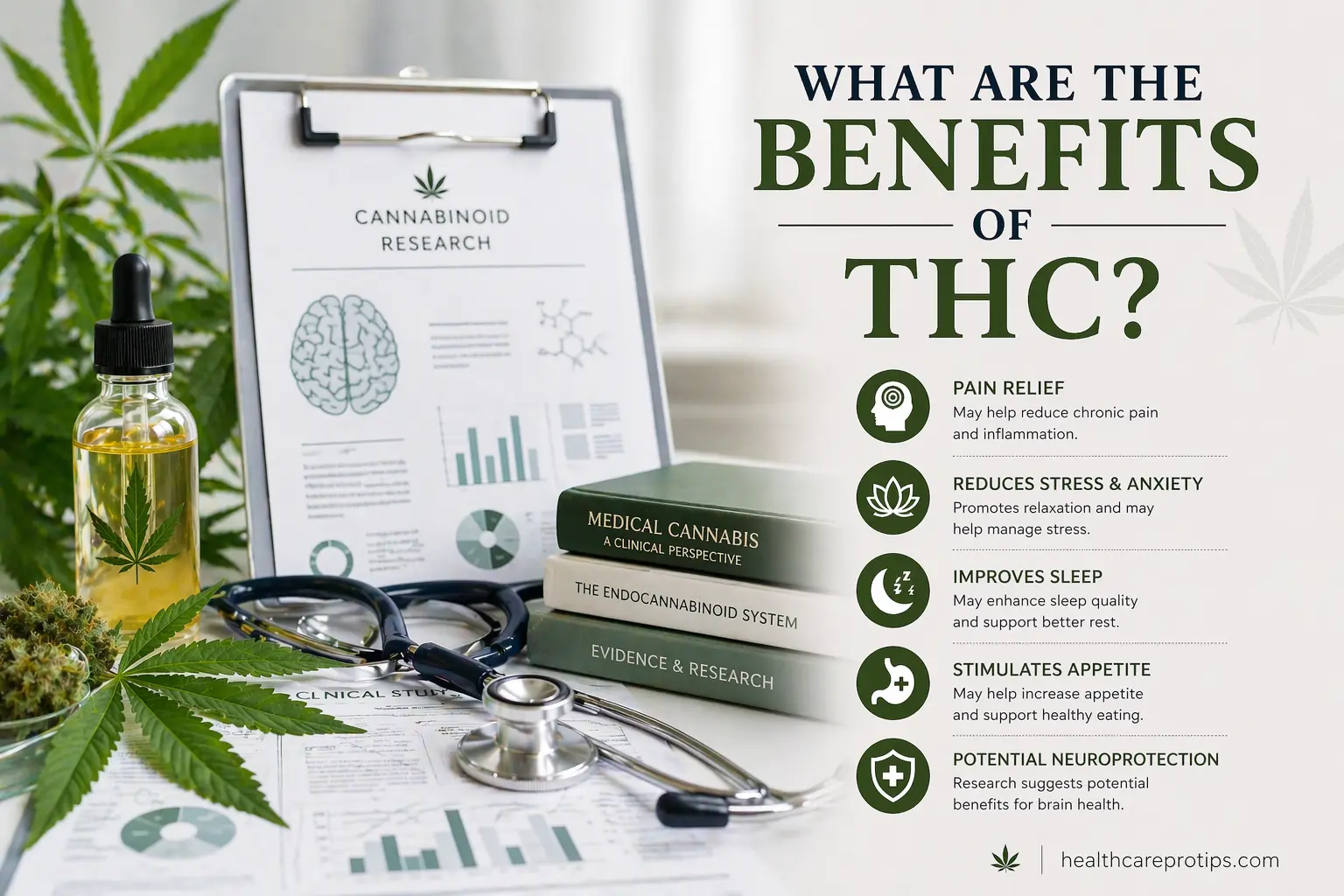
To understand why THC has medical applications, it helps to understand where it acts. The human body contains an endocannabinoid system, a network of receptors found throughout the brain, nervous system, immune system, and organs. This system plays a role in regulating pain, mood, sleep, appetite, inflammation, and immune response.
THC binds directly to the two primary receptors in this system, known as CB1 and CB2 receptors. CB1 receptors are concentrated in the brain and central nervous system, which is why THC affects perception, mood, and pain signalling. CB2 receptors are found primarily in immune tissue, which is relevant to THC’s anti-inflammatory effects. By activating this system, THC can influence several physiological processes simultaneously, which explains why it has been studied across such a wide range of conditions.
Pain Relief
Pain is the most common reason people seek medical cannabis, and it is also the area with the strongest body of clinical evidence supporting THC’s usefulness. The evidence is particularly consistent for neuropathic pain, the shooting, burning nerve pain associated with conditions like HIV, diabetes, and multiple sclerosis, where conventional pain medications often provide only partial relief.
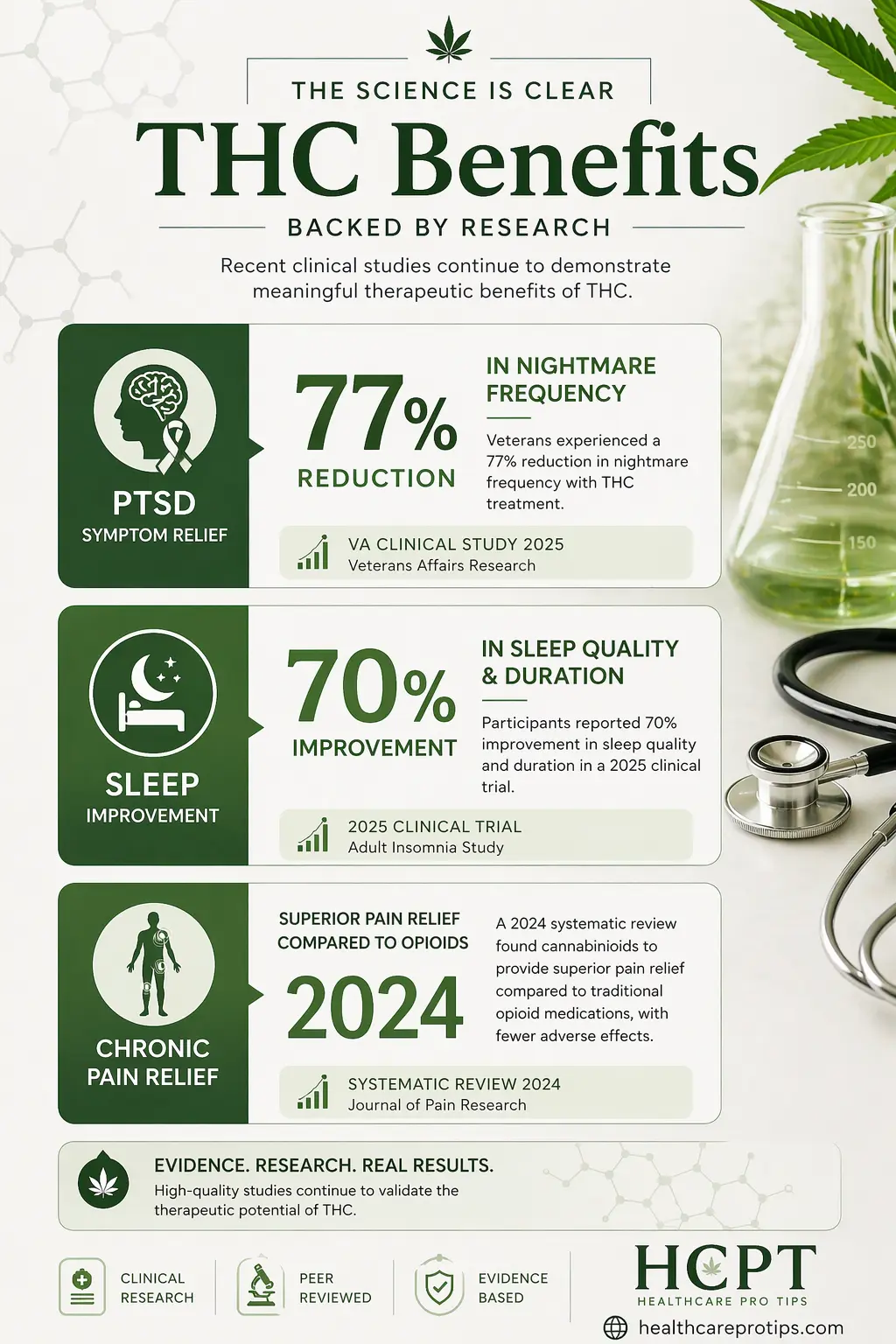
A significant 2024 systematic review of 99 clinical trials comparing cannabis-based medicines with opioids for chronic non-cancer pain, as reported by Medical News Today, found that cannabis and opioids produced similar levels of pain relief. Importantly, fewer patients discontinued cannabis treatment compared to opioids, suggesting better tolerability for some individuals.
2024 Systematic Review: Cannabis vs Opioids for Chronic Pain
An analysis of 99 randomised clinical trials found cannabis-based medicines to be similarly effective to opioids for managing chronic non-cancer pain, with patients less likely to stop treatment due to side effects. Published in the Journal of Pain Management and reviewed by peer researchers internationally.
According to Mayo Clinic, THC may specifically reduce the intensity of neuropathic pain, the type of shooting or burning pain caused by nerve damage, which is a distinct mechanism from how standard pain relievers work. This makes it potentially useful for patients who have not achieved adequate relief through conventional analgesics alone.
“There are some legitimate purposes for these compounds. Pain management is one area where cannabis-based medicines have shown real clinical utility, particularly for patients who struggle with the side effects of opioids or have not responded adequately to other treatments.”
Dr. Kevin Hill, Director of the Division of Addiction Psychiatry, Beth Israel Deaconess Medical Center, Harvard Medical School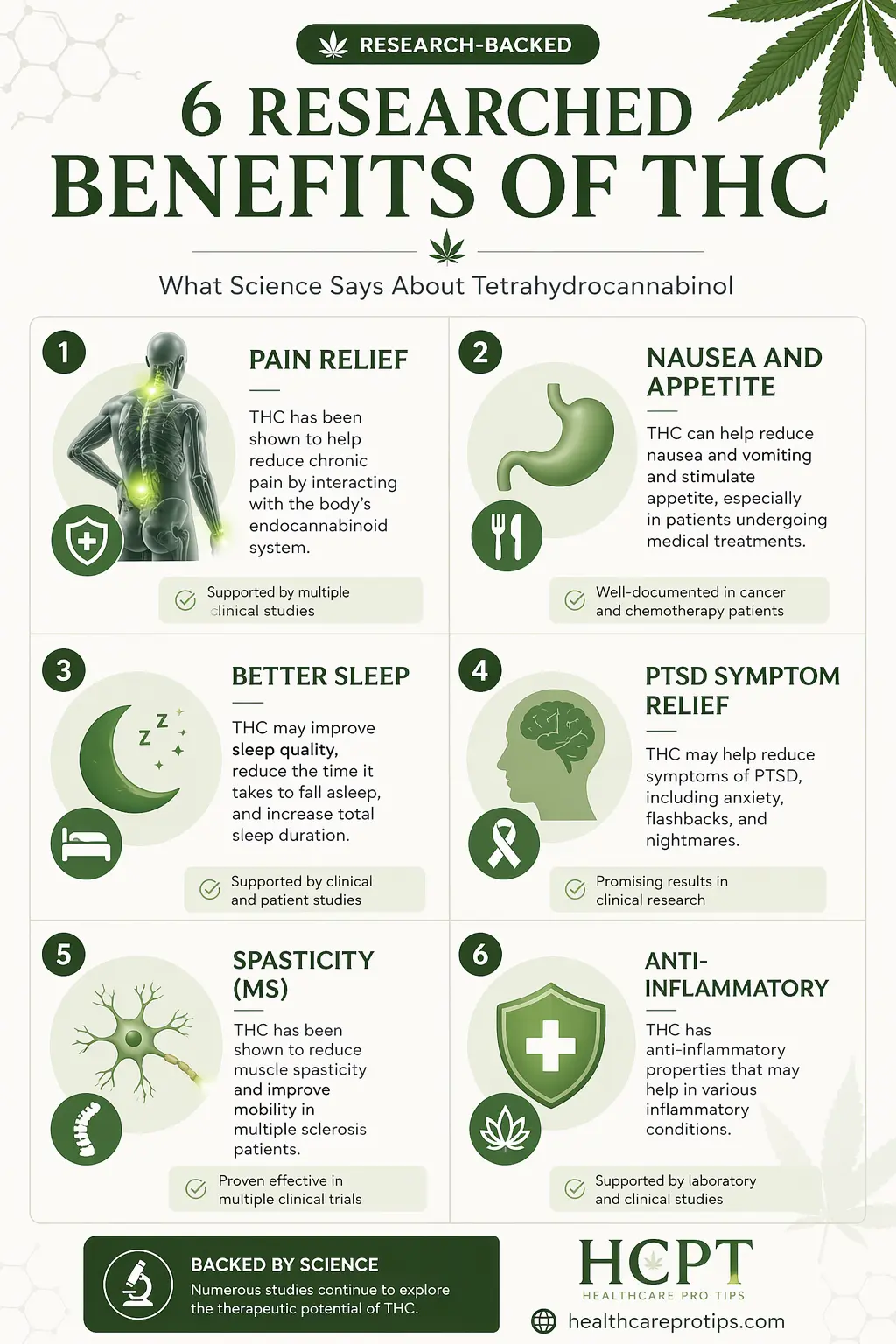
Nausea and Appetite Stimulation
This is arguably the best-established medical application of THC, supported by decades of research and recognised with two FDA-approved medications. Dronabinol and Nabilone are both synthetic THC compounds approved by the FDA specifically for treating chemotherapy-induced nausea and vomiting in patients who have not responded to standard anti-nausea medications.
THC’s anti-nausea effect is mediated through CB1 receptors in the brainstem, the region responsible for the vomiting reflex. By activating these receptors, THC suppresses the reflex at a neurological level. This mechanism is distinct from how most antiemetic drugs work, which is why THC can be effective in cases where other medications have failed.
Beyond chemotherapy patients, THC’s appetite-stimulating effect, commonly known as the munchies at recreational doses, has genuine medical utility for patients experiencing clinically significant weight loss due to HIV/AIDS, cancer, or other wasting conditions. Dronabinol is also FDA-approved for anorexia associated with AIDS-related weight loss specifically for this reason.
“For cancer patients dealing with severe nausea from chemotherapy, THC-based medications can make the difference between being able to eat and maintain strength through treatment, or not. The evidence for this specific application is among the strongest we have in the cannabinoid space.”
Commentary referenced in the National Cancer Institute review of cannabis for symptom management in oncology patients, 2024Sleep
Sleep is one of the most common reasons adults use medical cannabis, and the evidence here is genuinely mixed in a way worth understanding clearly. THC does tend to help people fall asleep faster and reduces the time spent in lighter sleep stages in the short term. A 2025 clinical trial found that 70 percent of participants reported improved sleep quality with cannabis use, including patients with insomnia and PTSD-related sleep disturbances.
The nuance lies in long-term use. THC suppresses REM sleep, the restorative sleep stage associated with dreaming, emotional processing, and memory consolidation. With prolonged regular use, tolerance to THC’s sleep-inducing effects also develops, meaning higher doses become necessary over time to achieve the same result. Some patients also experience sleep disruption during periods of stopping or reducing cannabis use.
2025 Clinical Trial: Cannabis and Sleep Quality
A 2025 clinical trial found that 70 percent of participants reported improved sleep quality with cannabis use. Patients with insomnia, restless leg syndrome, and PTSD-related sleep disturbances showed significant improvements, particularly in time taken to fall asleep and frequency of nighttime waking.
“If patients were to stop using cannabis for a month, they might find that their sleep actually improves. Some of what people interpret as cannabis helping sleep may reflect dependence on it to fall asleep rather than a genuine improvement in sleep quality.”
Ryan Vandrey, Professor of Psychiatry and Behavioral Sciences, Johns Hopkins University School of MedicineThe practical takeaway for medical cannabis patients considering THC for sleep is that short-term use under medical supervision, particularly for PTSD-related sleep disturbances or severe insomnia, has a reasonable evidence base. Long-term daily use purely for sleep is an area where medical guidance is strongly advisable.
PTSD Symptom Relief
PTSD is now a qualifying condition for medical cannabis in the majority of US states, and the evidence supporting this is growing meaningfully. THC’s role in modulating fear memory and stress response through the endocannabinoid system makes it a biologically plausible candidate for PTSD treatment, and clinical findings are beginning to reflect this.
A 2025 US Veterans Affairs study found that cannabis reduced PTSD-related nightmares in 77 percent of patients. Participants also reported improved sleep, reduced anxiety, and decreased flashback frequency. PTSD is one of the conditions where patient-reported outcomes most consistently align with the clinical findings, making it one of the stronger use cases for THC in a mental health context.
The research does note that results for overall PTSD symptom reduction are mixed, and that cannabis works most effectively as part of a broader treatment plan that includes counselling and therapy rather than as a standalone intervention. For patients who have not responded adequately to standard psychiatric medications, it represents a meaningful additional option worth discussing with a mental health professional.
Multiple Sclerosis and Muscle Spasticity
THC’s ability to reduce muscle spasticity in multiple sclerosis patients is one of the most consistently supported findings in cannabinoid medicine. Multiple clinical trials have demonstrated that cannabis-based medicines reduce patient-reported spasticity symptoms, and this has led to regulatory approval in several countries.
Nabiximols, a cannabis-based mouth spray combining THC and CBD in a standardised ratio, is approved in the UK, Canada, and several European countries for treating MS-related spasticity that has not responded to other treatments. As noted in the NCCIH/NIH overview of cannabis and cannabinoids, this represents one of the most evidence-backed applications of THC-containing medicines in current clinical practice.
According to the Mayo Clinic, cannabis may help treat the involuntary muscle movements and spasms associated with MS, with most research conducted on pill and spray formulations of cannabinoids rather than smoked cannabis.
Emerging Research Areas
Beyond the well-established applications, a growing body of research is investigating THC’s potential in several additional areas. These findings are early-stage and should be understood as promising rather than conclusive. They are included here because they represent the direction medical cannabis research is heading, not because they have reached clinical recommendation level.
- Anti-inflammatory effects: THC has demonstrated anti-inflammatory properties in preclinical research through its interaction with CB2 receptors in immune tissue. A 2025 preclinical study found THC accelerated wound closure and reduced inflammation by altering immune cell activity. Human trials are ongoing.
- Neuroprotection: Early research suggests cannabinoids may have neuroprotective properties relevant to conditions like Alzheimer’s and Parkinson’s disease. The evidence is largely preclinical at this stage and not yet sufficient to support clinical recommendations.
- Opioid reduction: A 2024 study of 1,800 chronic pain patients found that those using medical cannabis reduced their opioid use by 25 percent on average, suggesting a potential role for THC as a complementary therapy to reduce opioid dependency in pain management.
- Glaucoma: THC has been shown to reduce intraocular pressure, the primary driver of optic nerve damage in glaucoma. However, its short duration of action and side effect profile make it less practical than existing glaucoma treatments for most patients.
2024 Study: Medical Cannabis and Opioid Reduction
A 2024 study following 1,800 chronic pain patients found that those using medical cannabis reduced opioid use by an average of 25 percent. Many also reported improved quality of life and fewer emergency and urgent care visits. Published in the Journal of Pain Management.
Important Considerations Before Using THC Medically
A balanced understanding of THC’s benefits requires an equally honest understanding of the conditions under which those benefits are most safely realised. None of the following is intended to discourage anyone from exploring medical cannabis. It is intended to help people make genuinely informed decisions.
People with a personal or family history of psychosis, schizophrenia, or certain mood disorders are generally advised to exercise particular caution with THC, as high-potency THC products have been linked to increased risk of psychosis in vulnerable individuals. A 2025 review of nearly 100 studies found strong associations between high-potency cannabis and psychosis risk. This does not mean THC is off-limits for everyone with mental health conditions, but it does mean a conversation with a psychiatrist or physician is essential before beginning.
THC also interacts with several common medications including blood thinners, sedatives, and certain antidepressants. Disclosing cannabis use to all treating physicians ensures those interactions can be monitored and managed appropriately.
“Medical cannabis interacts with the body’s endocannabinoid system, which regulates pain, mood, inflammation, sleep, and immune responses. When used responsibly under medical guidance, it can play a valuable role in supporting symptom relief and improving quality of life for many patients.”
California Spine and Pain Institute, Medical Cannabis 2025 Patient OverviewFor a comprehensive and up-to-date overview of what research shows about cannabis and cannabinoids, the 2025 PMC/NIH systematic review on cannabis, cannabinoids and health is one of the most thorough peer-reviewed resources currently available.