

How to Fake Being Sick Convincingly — Easy Tips that Really Works
Look, sometimes you just need a day. Not because you are dying, not because you have a documented illness, but because you are running on empty and the alternative is showing up somewhere and being completely useless anyway. Whether it is school, work, or a social obligation you simply cannot face — knowing how to fake being sick convincingly is a genuinely useful life skill.
The problem is that most advice on this topic is terrible. It tells you to cough loudly, mention diarrhea to your boss, or rub your eyes red. None of that is how real illness actually works — and people who interact with sick people regularly can spot the performance a mile away.
This guide is different. It is built around how illness actually presents itself physically, behaviorally, and vocally — because understanding what real sickness looks like is the only reliable foundation for faking it convincingly. Everything here is practical, specific, and designed to hold up under scrutiny.
Step 1 — Choose the Right Illness for Your Situation
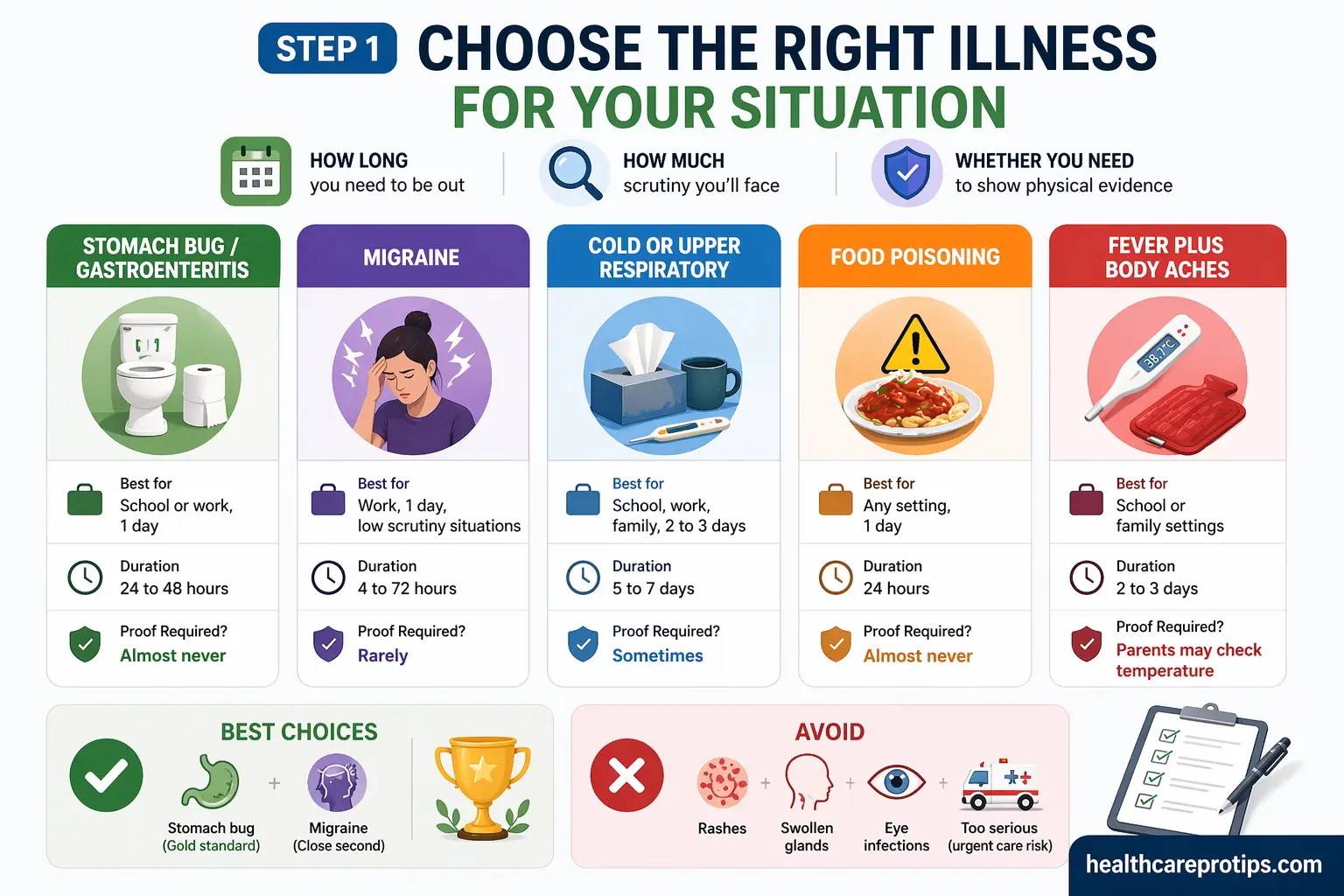
The single biggest mistake people make is picking the wrong illness. Your choice should be based on three factors: how long you need to be out, how much scrutiny you will face, and whether you need to show physical evidence.
| Illness | Best For | Duration | Proof Required? |
|---|---|---|---|
| Stomach bug / gastroenteritis | School or work, 1 day | 24 to 48 hours | Almost never |
| Migraine | Work, 1 day, low scrutiny situations | 4 to 72 hours | Rarely |
| Cold or upper respiratory | School, work, family, 2 to 3 days | 5 to 7 days | Sometimes |
| Food poisoning | Any setting, 1 day | 24 hours | Almost never |
| Fever plus body aches | School or family settings | 2 to 3 days | Parents may check temperature |
The stomach bug is the gold standard for most situations. It is highly believable, extremely common, nobody wants to ask follow-up questions about it, nobody can disprove it, and it naturally resolves in 24 hours so your recovery is completely plausible. Migraines come in a close second because they are invisible, subjective, and genuinely debilitating for sufferers — which means people rarely push back on them.
Avoid anything that requires visible, measurable proof you cannot easily produce — rashes, swollen glands, obvious eye infection. Also avoid anything so serious that people might insist on driving you to urgent care. Stick to plausible, common, and inherently private.
Step 2 — Start the Night Before (This Is What Most People Skip)
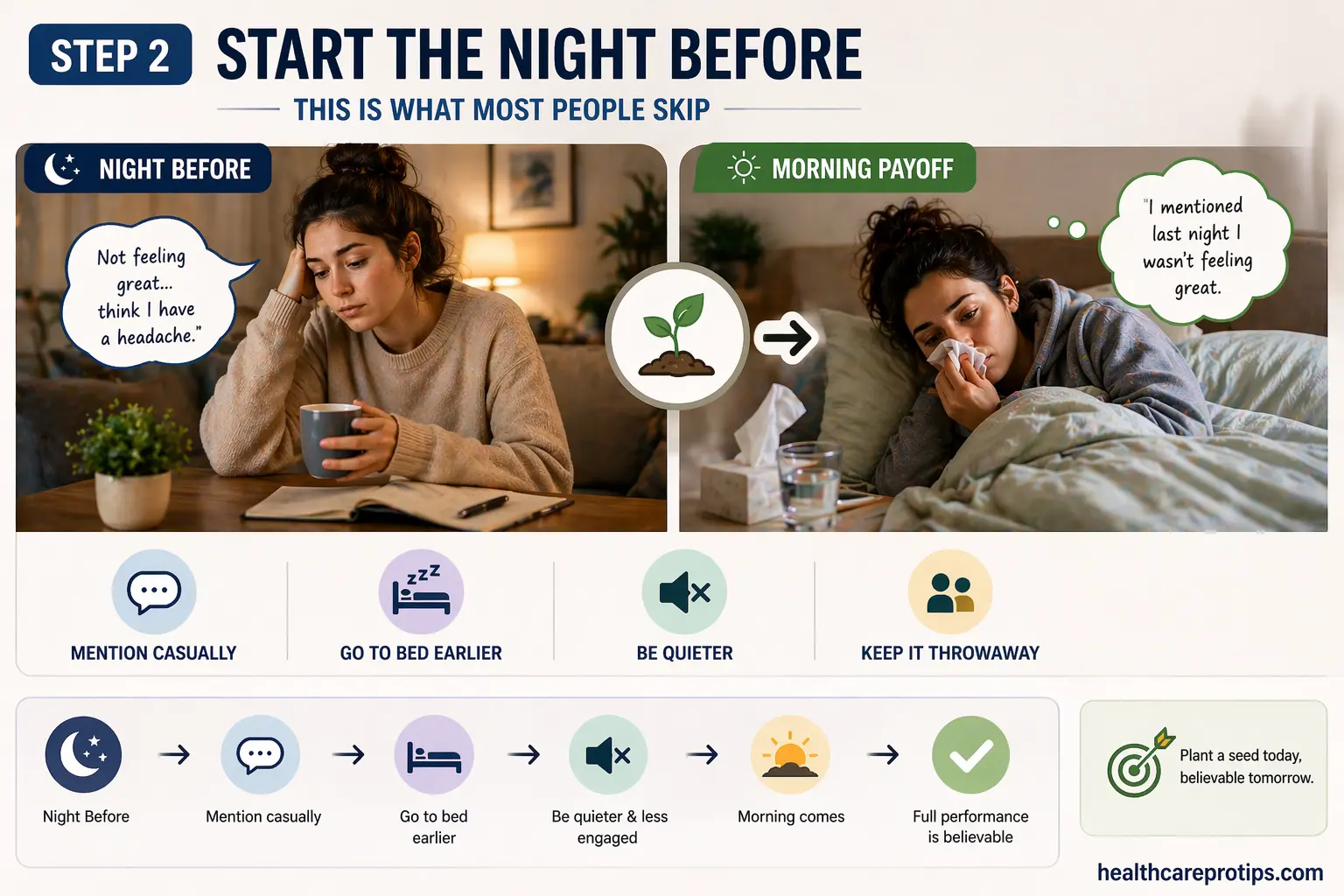
Real illness does not start fully formed at 7am when you need to call in. It builds. The most convincing fake sick performances always begin with groundwork laid the evening prior.
Here is what that looks like in practice. The night before, mention casually that you are not feeling great. Nothing dramatic. “I have a bit of a headache” or “my stomach feels a little off” is enough. Keep it throwaway — you are not performing, you are planting a seed. If someone at work or school is around, a single offhand comment is all you need. If it is a parent or partner, mention it while doing something else so it does not feel staged.
Then go to bed slightly earlier than usual. You do not need to act dramatically ill — just quieter and less engaged than normal. When morning comes and you follow up with the full performance, people will remember that you mentioned not feeling well the night before. That retrospective confirmation is enormously powerful. It means your illness has a history, not just a convenient morning debut.
Step 3 — How to Look Sick in the Morning Without Props
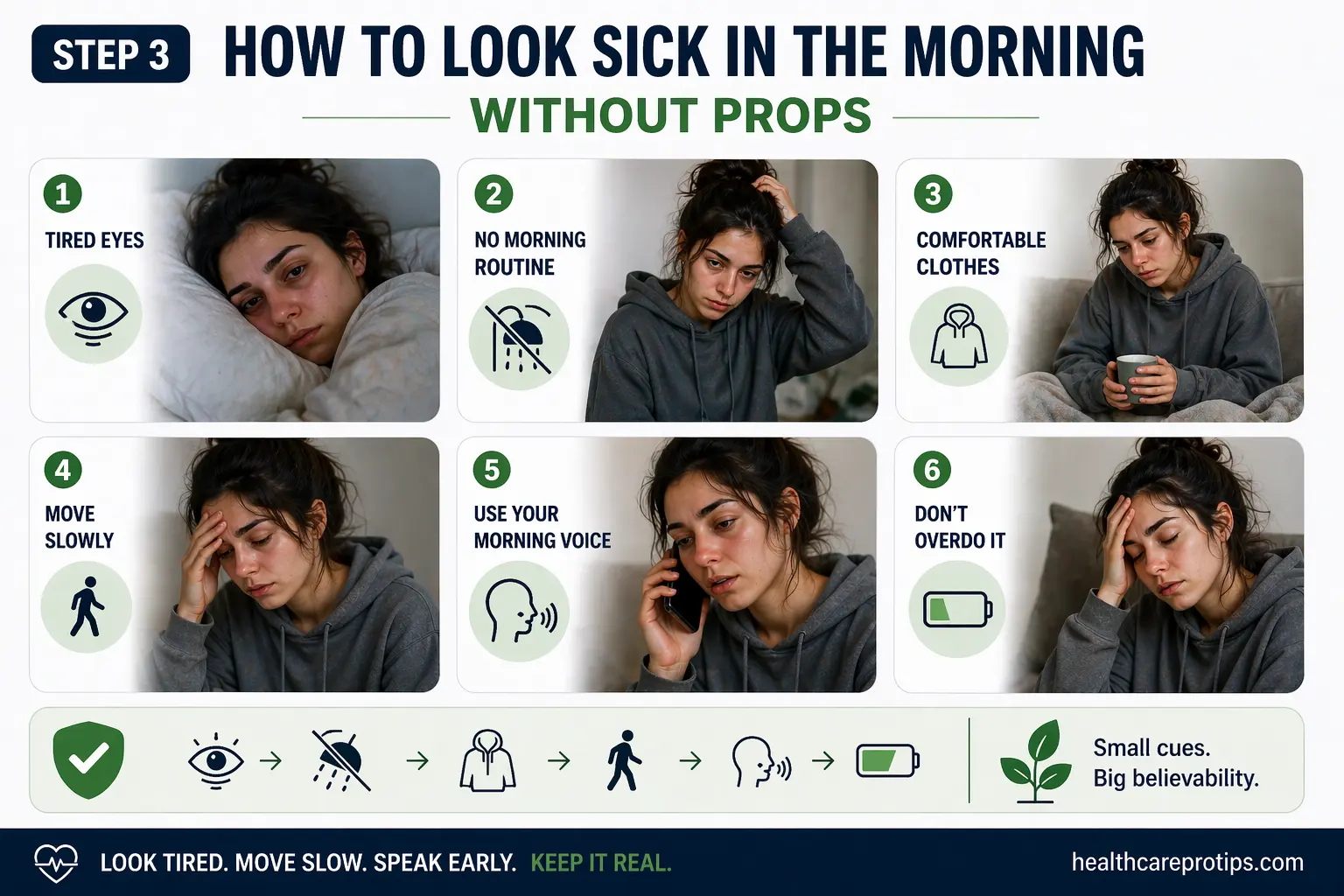
If you need to be seen in person before calling in — by a parent, partner, or roommate — appearance matters. The good news is that looking genuinely unwell is not about dramatic makeup or theatrical groaning. Real sick people mostly look tired, pale, and slightly absent. That is entirely achievable.
Sleep in an unusual position so you wake up with genuinely tired eyes. Real illness causes dark circles and puffiness, not dramatic pallor. Skip your morning routine — no shower, no hair styling, no fresh clothes. Sick people do not put effort into their appearance. Wear the same clothes you slept in or something loose and clearly comfortable. Move slowly. Not theatrically, just unhurriedly. Real fatigue makes every movement feel like a minor effort.
Your voice will naturally be slightly rougher in the morning from sleep — use that. Call or speak before fully waking your voice up. A morning voice sounds authentically unwell without any performance required. This is actually one of the strongest cards you have and most people throw it away by waiting until they are fully awake before making the call.
Step 4 — Making the Call or Sending the Message
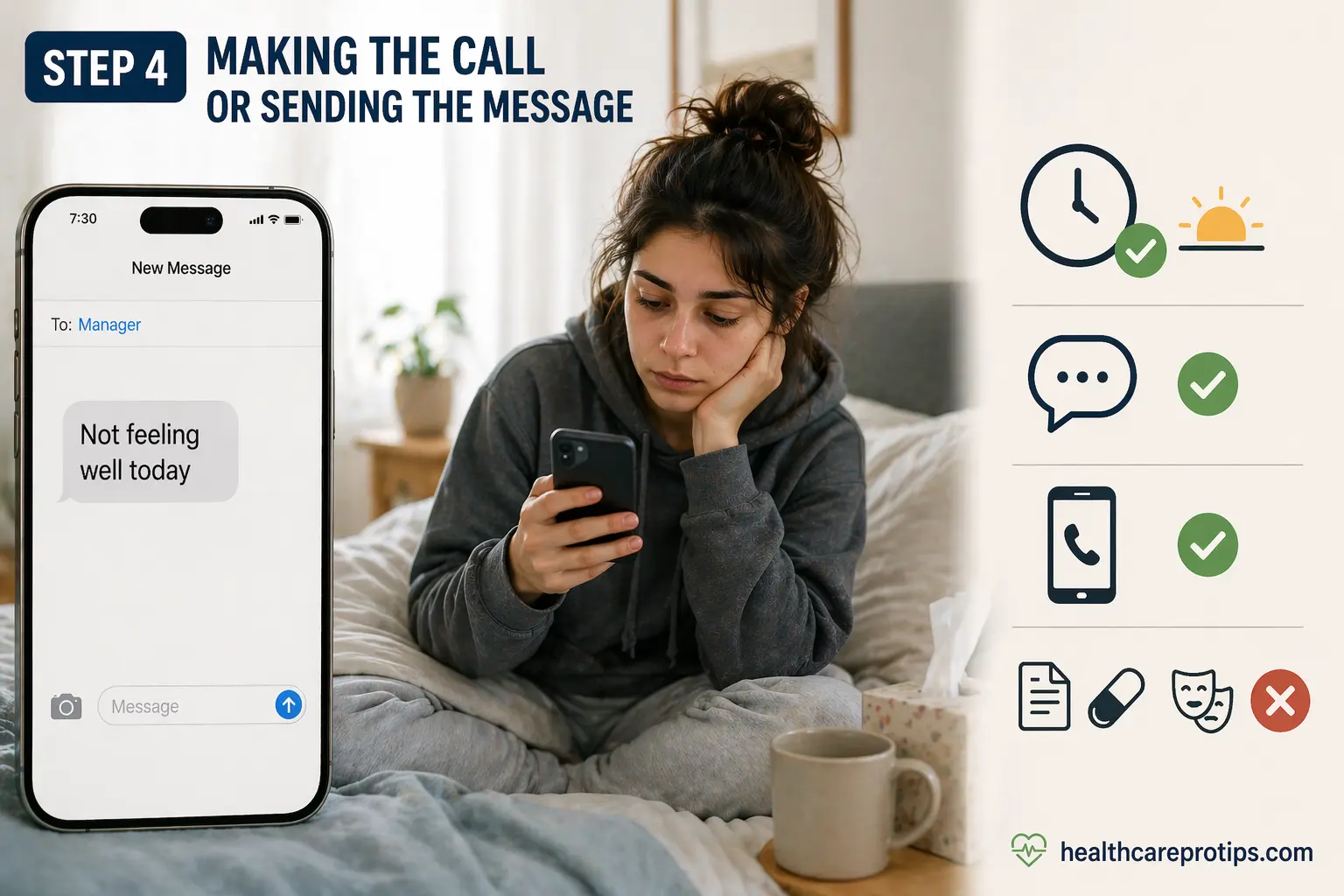
How you communicate the illness matters as much as the symptoms themselves. Here is what separates convincing calls from ones that raise eyebrows.
Timing. Call or message early — before your shift or class starts, not right at the beginning of it. A message sent 90 minutes before you are due in looks like someone who genuinely woke up ill and gave it some thought. A message sent three minutes before looks like a last-minute decision.
What to say. Keep it specific enough to be believable but not so detailed it sounds rehearsed. “I was up most of the night with a stomach bug and I am still not keeping anything down” is perfect. It is specific, has a timeline, is entirely common, and unpleasant enough that nobody wants to investigate further.
Text vs call. For work, a text or email is usually preferable — it preserves your morning voice for any voicemail and gives you time to word things correctly. For school, a parent calling tends to be more convincing. For family situations, voice notes or calls work best because people can hear how you sound.
What not to say. Do not offer elaborate backstories. Do not pre-apologize excessively. Do not mention specific medications you took. Real sick people are mostly just tired and slightly annoyed at being sick — they are not performing for an audience.
Indicating the symptoms is not acting. Feeling the physical sensations of those symptoms and then trying to mask them is what comes across as authentic. We do not need to see you play all of them — we just need to see you try to overcome them.
Doug Fahl, Professional Actor and Acting Coach, on portraying illness convincinglyThat acting insight is genuinely useful here. The most convincing way to behave when faking sick is to act as though you want to push through but cannot quite manage it — not as though you are defeated and helpless. Real sick people often feel guilty about missing things. That subtle reluctance reads as authentic in a way that dramatic suffering never does.
Step 5 — Body Language and Behavior While You Are Sick
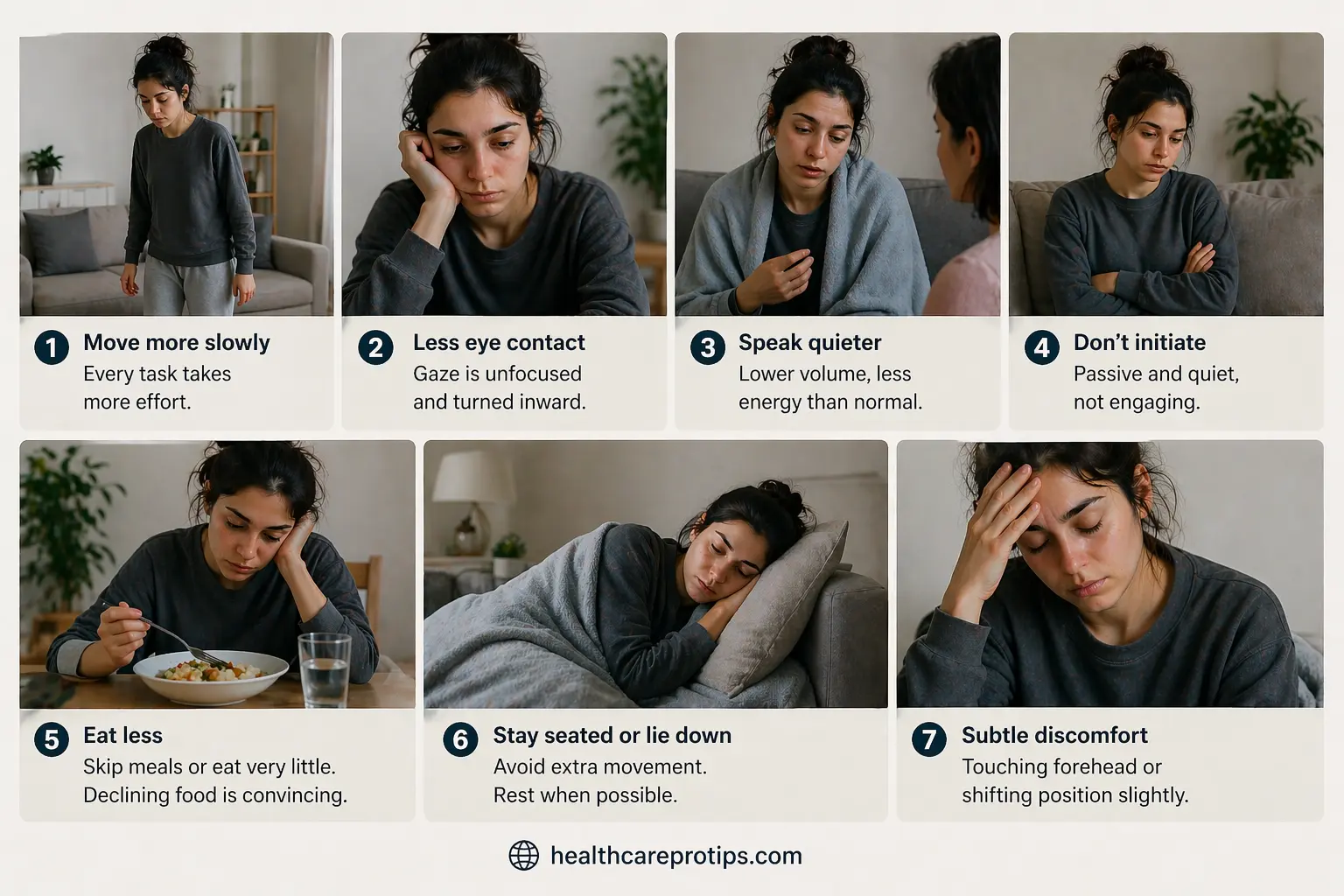
If you are in person rather than calling in, this is where most fake sick performances fall apart. People overperform. They groan more than necessary, hold their stomach with both hands, and forget to be consistently unwell throughout the day rather than just when someone is watching.
Real illness is constant and slightly dull, not episodic and theatrical. Here is how authentic sick behavior actually looks:
- Moving more slowly and deliberately than usual — every physical task takes slightly more effort
- Less eye contact and a slightly unfocused gaze — genuinely unwell people are turned inward
- Speaking at slightly lower volume and with less energy than normal — not a weak whisper, just quieter
- Not initiating conversation or jokes — sick people are passive, not dramatically withdrawn
- Eating less or skipping food entirely — declining food is one of the most convincing sick signals there is
- Staying seated when you normally might stand, or lying down when given the option
- Subtle physical cues like pressing your forehead occasionally or shifting position as if uncomfortable
The most important rule: stay consistent. The performance falls apart when people are visibly fine one moment and dramatically ill the next. Consistent, low-level malaise is infinitely more convincing than intermittent dramatic suffering.
The Symptoms That Are Hardest to Disprove
Understanding which symptoms are subjective and which are measurable is the core strategic knowledge for faking illness convincingly. The following are the most effective because they cannot be easily verified by anyone without medical equipment.
Migraine
Entirely subjective, invisible, genuinely debilitating, and medically legitimate. Nobody can tell you your head does not hurt. Comes with secondary symptoms like light sensitivity and nausea. Typically lasts 4 to 72 hours so your timeline is very flexible.
Gastroenteritis (Stomach Bug)
The undisputed champion of sick day excuses. Every adult has had it, nobody asks for proof, and mentioning it ends conversations immediately. See our article on how to fake a stomach ache for specific techniques that make this even more convincing.
Food Poisoning
Has a built-in explanation (something you ate last night) and a clear 24-hour timeline. Comes with nausea, stomach pain, and general wretchedness that needs no visible proof.
Upper Respiratory / Cold
Good for multi-day absences. Works well for in-person situations because a rough voice, occasional throat clearing, and sniffling are easy to maintain consistently throughout the day.
The Digital Footprint Problem — What Gets People Caught
Most people know not to post restaurant pictures on Instagram while supposedly home with a stomach bug. But the digital footprint problem goes much deeper than obvious social media posts.
- Do not like, comment on, or actively engage with social media posts — active engagement has timestamps visible to mutual connections
- Do not check in anywhere using apps, payment cards, or loyalty programs — these create records that can surface in unexpected conversations
- Be aware of work or school apps showing you as “online” while supposedly too ill to be there
- Do not send unusually cheerful or energetic messages to colleagues during your sick day
- Be cautious about location sharing apps — many people forget these are running
- Keep your story consistent in all follow-up conversations — inconsistencies in timeline, symptoms, or severity are the most common internal contradiction that undermines performances
The Return — How to Come Back Without Raising Suspicion
This is the part almost every guide ignores entirely, and it is genuinely important. The way you return from a fake sick day is as important as the performance itself.
Real illness does not end overnight in a spectacular recovery. Come back slightly quieter than usual. Mention that you are “feeling a lot better but still not fully back to normal.” Eat a little lighter or mention you are still not fully hungry. Within a day you can be fully back to normal — but that first day back should be a 90 percent version of yourself, not a 110 percent bounce back that makes people wonder how sick you actually were.
Keep answers to questions brief and consistent with whatever you said originally. “Yeah, whatever that was really knocked me out” is all you need. Real sick people are actually quite glad to put it behind them and move on — so doing exactly that reads as authentic.
When Faking Sick Is Actually a Sign of Something Real
If you find yourself needing to fake sick regularly — weekly, or even a few times a month — the issue is not that you need better faking techniques. It is that something in your actual life needs addressing. Burnout, anxiety, workplace stress, school pressure, and general overwhelm are real, medically recognised conditions.
Mental health days are legitimate and increasingly recognised as such. Many employers and schools now have provisions for them. The urge to fabricate a physical illness to get time off is often a signal that you need that time for genuinely important reasons — and that you do not feel safe asking for it directly.
Our articles on sleep habits and building natural energy cover some of the physical reasons people feel chronically exhausted and overwhelmed, which often underlies the frequent need for escape days.