
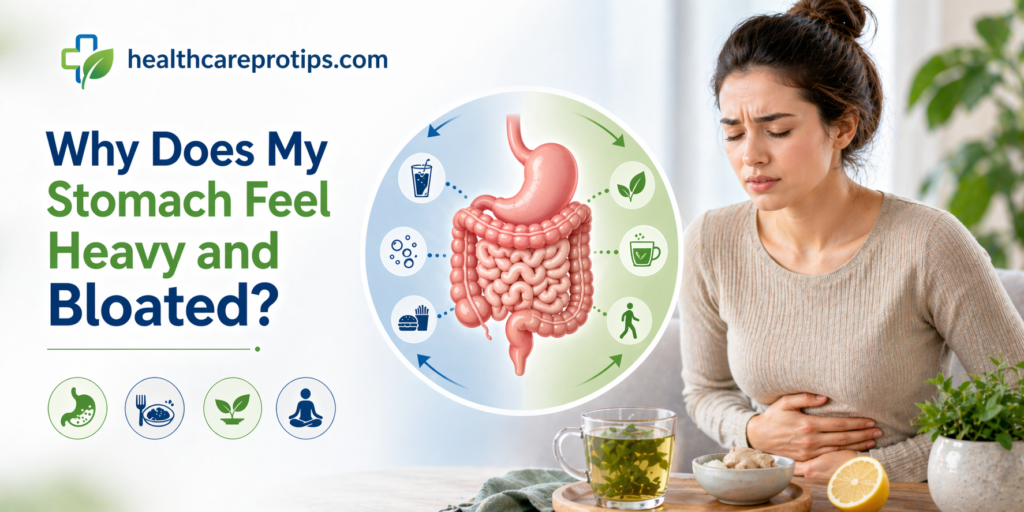

Why Does My Stomach Feel Heavy and Bloated? Causes and Natural Fixes
You finish a meal, sit back, and instead of feeling satisfied, your stomach feels like a lead weight. Heavy, full, uncomfortably tight. Maybe there is some gurgling happening, maybe your belly looks slightly more rounded than usual. You wonder what just happened.
The truth is, almost everyone deals with this at some point. But when it starts happening regularly — after meals, first thing in the morning, or seemingly out of nowhere — it stops being just an inconvenience and starts being a pattern worth understanding.
This guide breaks down exactly why your stomach feels heavy and bloated, what it could be telling you about your digestive health, and the most effective natural ways to actually fix it.
What Does That Heavy Feeling Actually Mean?
Bloating and heaviness in the stomach are not quite the same thing, though they often show up together. Bloating refers to the sensation of fullness, tightness, or pressure in your abdomen, and it is usually caused by gas or fluid buildup. That heavy feeling — the one that makes you want to lie down and not move — tends to happen when your stomach is either moving food through too slowly or struggling to break something down properly.
According to the National Institute of Diabetes and Digestive and Kidney Diseases (NIDDK), bloating is a feeling of fullness or swelling in the abdomen that often occurs alongside gas produced when bacteria in your large intestine break down carbohydrates your small intestine could not fully digest. That fermentation process creates gas, and that gas has to go somewhere.
The discomfort you feel is real and physical, not just in your head. Your gut has more nerve endings than your spinal cord, which is why even small amounts of gas or pressure can feel significant when your digestive system is reacting.
The Most Common Reasons Your Stomach Feels Heavy and Bloated
There is rarely just one reason. Most cases of regular bloating are the result of a combination of factors. Here are the ones that come up most consistently.
Eating Too Fast
Speed-eating is one of the most underrated causes of bloating. When you eat quickly, you swallow significantly more air than you realize. That air enters your digestive tract and gets trapped, creating that familiar balloon-like pressure. Beyond the air issue, eating fast also means you are not chewing thoroughly enough, so your stomach has to work considerably harder to break down larger food particles. That extra effort slows digestion down and creates the heavy, sluggish feeling that lingers for hours.
High-Fat or Fried Foods
Fat takes longer to digest than carbohydrates or protein. A meal heavy in fried food, fatty cuts of meat, or rich sauces can sit in your stomach for a much longer time than a lighter meal would. This is called delayed gastric emptying and it is exactly what creates that sensation of a brick sitting in your stomach after certain meals. The body is not malfunctioning — it just has a lot of work to do.
Eating Larger Portions Than Your Stomach Can Handle
Your stomach is roughly the size of your fist. It can stretch to accommodate more, but when you consistently eat larger portions, you are pushing it beyond its comfortable capacity. Overeating stretches the stomach wall and triggers discomfort signals. One important detail many people miss: it takes approximately 20 minutes for your stomach to send the fullness signal to your brain. By the time you feel full, you have often already eaten past the point of comfort.
Food Sensitivities Including Lactose and Gluten
Lactose intolerance is more common than most people realize. When your body lacks enough lactase enzyme to digest lactose (the sugar found in dairy), undigested lactose moves into your colon where it gets fermented by bacteria, producing significant amounts of gas and causing bloating, heaviness, and sometimes cramps. A similar process happens with gluten sensitivity in people who react to it even without celiac disease. If your bloating tends to follow specific foods consistently, a food diary is one of the most useful tools you can start with.
FODMAP Foods
FODMAPs are a group of carbohydrates that are difficult for many people to digest. The name stands for Fermentable Oligosaccharides, Disaccharides, Monosaccharides, and Polyols. Foods like onions, garlic, apples, legumes, and wheat fall into this category. For people with sensitive guts, these foods pass through the small intestine undigested and get fermented in the large intestine. The result is gas, heaviness, and bloating that can be quite intense even from small portions.
Constipation
When stool sits in the colon longer than it should, bacteria have more time to produce gas. That extra gas has nowhere to go easily, which is why constipation almost always comes with a feeling of fullness and heaviness in the abdomen. Even mild or irregular constipation can create consistent bloating that does not seem to have an obvious food-related trigger on the surface.
Less Obvious Triggers Most People Miss
Once the more obvious causes are ruled out, these are the factors that often get overlooked but matter just as much.
Stress and Anxiety
The gut-brain connection is real and well-documented. As explained by gastroenterologists at Houston Methodist Hospital, stress increases visceral hypersensitivity and alters gut motility, meaning your digestive tract becomes more reactive under pressure. Even without any changes to what you eat, a stressful week can cause your stomach to feel consistently heavy and uncomfortable.
Carbonated Drinks
Fizzy drinks including sparkling water, sodas, and beer introduce carbon dioxide gas directly into your digestive system. While you burp some of it away, the rest travels to your intestines. Swapping even one carbonated drink a day for plain water can make a noticeable difference for people who bloat frequently.
Gut Bacteria Imbalance
Your gut microbiome plays a significant role in how efficiently you digest food. When the balance between beneficial and harmful bacteria is disrupted by antibiotics, a poor diet, chronic stress, or illness, gas production increases and digestion slows noticeably. This is one reason bloating sometimes becomes a persistent issue rather than an occasional one.
Certain Medications
Some common medications including antidepressants, sleeping pills, and certain pain relievers can slow bowel contractions, leading to gas buildup and a persistent feeling of heaviness. If your bloating started around the same time as a new medication, it is worth raising with your doctor.
Too Much Sitting After Meals
Physical movement helps move gas through your digestive tract. When you spend most of the day seated, especially right after eating, digestion slows considerably. Even a short 10-minute walk after meals can significantly reduce that post-meal heaviness that many people assume is just normal.
When Bloating Is a Warning Sign
The vast majority of bloating cases are harmless and resolve on their own or with simple dietary changes. However, there are situations where a heavy, bloated stomach is pointing to something that needs medical attention.
Conditions like irritable bowel syndrome (IBS), small intestinal bacterial overgrowth (SIBO), gastroparesis, and celiac disease can all present with chronic bloating as a primary symptom. According to Northwestern Medicine, SIBO in particular — an excess of bacteria in the small intestine — is a commonly overlooked cause of chronic bloating that can only be properly diagnosed and treated with medical guidance.
For women, hormonal fluctuations around menstruation are a very common cause of cyclic bloating. Estrogen can cause water retention while changes in progesterone affect gut motility, both contributing to that swollen, heavy feeling in the days before a period. This type of bloating is normal but can be managed effectively with the right approach.
How to Fix It Naturally
The good news is that for most people, consistent bloating responds well to specific lifestyle and dietary changes. These are not vague wellness suggestions — they are practical adjustments with clear mechanisms behind them.
Slow Down When You Eat
Put your fork down between bites. Chew each mouthful thoroughly before swallowing. This sounds overly simple but it genuinely makes a significant difference. Proper chewing starts the digestive process in your mouth and means your stomach receives food it can actually work with efficiently rather than large, hard-to-process chunks.
Keep a Food Diary for One Week
Write down what you eat and how your stomach feels 30 minutes and 2 hours after each meal. Patterns usually become obvious within a few days. This is consistently recommended by gastroenterologists as a first step because it removes guesswork and points directly at your personal triggers.
Walk After Meals
A 10 to 15 minute gentle walk after eating speeds up gastric emptying and helps move trapped gas through your system. You do not need to jog or do anything strenuous. Just get upright and moving. Research consistently shows that even light post-meal movement improves digestion noticeably.
Temporarily Reduce High-FODMAP Foods
Try cutting out the most common FODMAP culprits for two weeks — onions, garlic, beans, apples, and wheat-based products. Then reintroduce them one at a time to identify which ones your gut actually reacts to. Not everyone reacts to all FODMAPs, so this process helps you build a personalised picture rather than eliminating foods unnecessarily.
Drink More Plain Water Between Meals
Dehydration slows everything down in your digestive tract and contributes directly to constipation, which then causes bloating. Aim for six to eight glasses of water daily and drink it between meals rather than in large quantities during meals, which can dilute digestive enzymes.
Switch to Smaller, More Frequent Meals
Instead of three large meals, try four to five smaller ones throughout the day. This reduces the workload on your stomach at any given time and keeps digestion moving more consistently. As recommended in NIDDK dietary guidelines for digestive gas, eating smaller and more frequent portions is one of the primary adjustments for managing bloating effectively.
Actively Address Stress
If your bloating is worse during stressful periods, your nervous system is likely part of the equation. Even 10 minutes of deep breathing, a short meditation, or light yoga can help calm the gut-brain axis. It is not a cure for structural digestive issues but it makes a measurable difference for stress-related bloating.
Foods That Actually Help Relieve Bloating
Some foods actively support digestion and help relieve that heavy feeling faster. These are worth adding to your regular diet rather than waiting until you are already uncomfortable.
| Food | Why It Helps | Best Used |
|---|---|---|
| Ginger | Relaxes intestinal muscles and speeds up stomach emptying | Ginger tea after meals |
| Peppermint | Reduces muscle spasms in the gut and relieves trapped gas | Peppermint tea or peppermint oil capsules |
| Papaya | Contains papain, a digestive enzyme that breaks down protein | Fresh fruit or enzyme supplement |
| Fennel seeds | Relaxes gut muscles and helps gas pass more easily | Chewed after meals or as tea |
| Banana | Rich in potassium which helps flush out excess sodium and water retention | As a snack between meals |
| Chamomile tea | Anti-inflammatory properties that calm the gut lining | Before bed or when feeling uncomfortable |
- A heavy, bloated stomach is most often caused by trapped gas, slow digestion, food intolerances, or constipation
- Eating too fast, high-fat meals, carbonated drinks, and FODMAP-rich foods are among the most common triggers
- Stress directly affects digestion through the gut-brain axis and should not be underestimated as a cause
- Keeping a food diary is one of the most effective first steps to identifying your personal triggers
- Simple habits like walking after meals, slowing down while eating, and staying hydrated can make a significant difference
- If bloating is frequent, severe, or accompanied by other symptoms, consult a healthcare professional to rule out underlying conditions
Related Reading on HealthCareProTips
If you found this helpful, these articles go deeper into the topics connected to your digestive health:
- How to Speed Up Digestion Naturally — practical steps to keep things moving efficiently every day
- Worst Foods for Gut Health — the dietary patterns most likely causing your recurring bloating and discomfort
- Can Poor Gut Health Cause Acne? — how your digestion affects your skin from the inside out